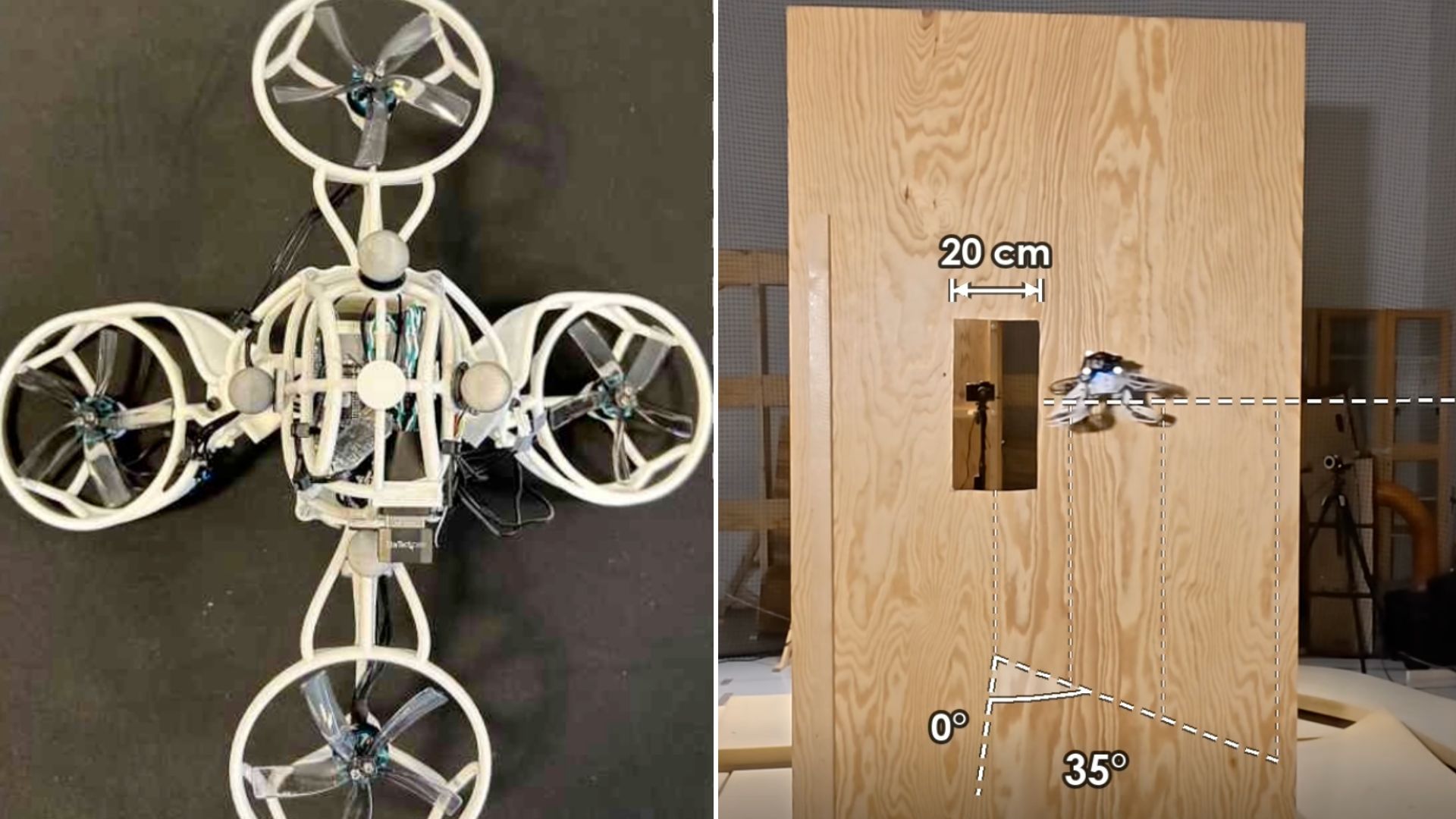
MIT's insect-sized flying robot now carries its own sensors and computer
MIT researchers have flown a flapping-wing microrobot that weighs less than a paper clip using only onboard sensors and computing, and landed it on a sunflower. It still needs a power tether.
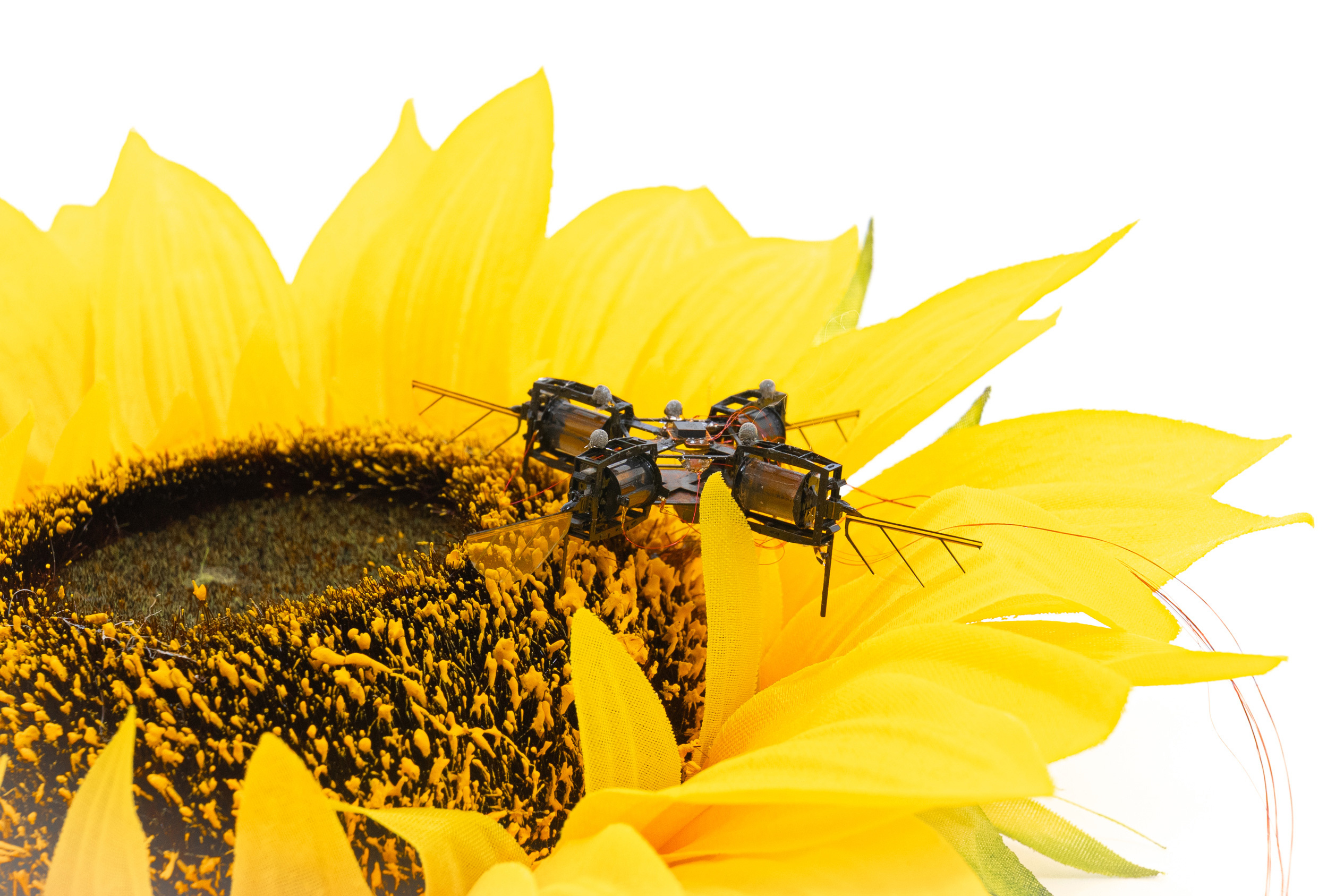
Researchers at MIT have built a flapping-wing microrobot that navigates with its own sensors and computer instead of relying on the motion-capture cameras of a lab. The robot is about the size of a microcassette and weighs less than a paper clip. In tests it hovered at set heights and followed point-to-point routes with errors of only a few centimeters, and with a person steering by joystick it flew around several plants and landed on a sunflower. The work is published in Science Robotics.
To carry the extra weight, the team made the soft artificial muscles that drive the four wings 50 percent larger, which raised net lift by 46 percent. The electronics package weighs 244 milligrams and holds a microcontroller plus three sensors: one for orientation, one for sideways speed and one for height. It uses about 6 percent of the robot's total power. The robot is not yet free-flying: power still comes through a wire, and it has no camera.
Why it matters
Insect-sized robots are often pitched for jobs such as pollinating crops or inspecting tight industrial spaces, but until now they could only fly inside a lab that tracked them with external cameras. Moving sensing and computing on board removes one of the two big ties to the lab. The other is power. Lead researcher Kevin Chen's group says its next steps are an onboard camera for avoiding obstacles and batteries for untethered outdoor flight.