Simulated Unitree G1 walkers topple abruptly when one side's motor commands weaken
A simulation study of eight Unitree G1 walking policies found balance fails sharply, not gradually, once commands to one side fall to roughly 55 to 75 percent.
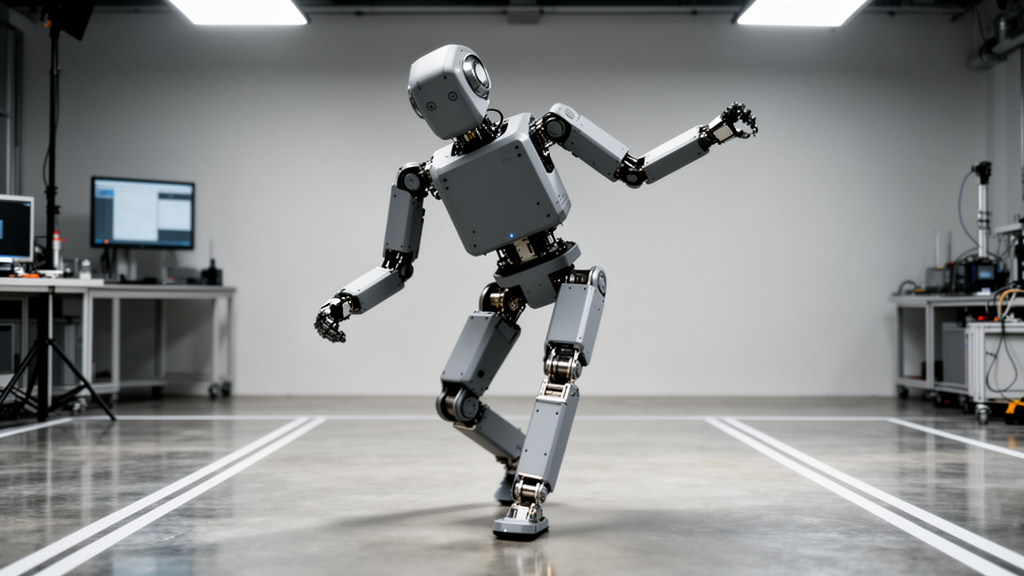
A simulation study tested eight independently trained walking controllers for the Unitree G1 humanoid, a 33.3 kg robot with 29 actuated joints. The researchers scaled down the commands sent to all 13 arm and leg joints on one side by a factor they called alpha, without retraining the controllers. At 80 percent output every policy kept walking at 0.5 meters per second. Between 75 and 55 percent, falls rose steeply, and at 55 percent every policy fell on both sides.
The side mattered. Individual thresholds ranged from 65 to 75 percent for the right side and 60 to 70 percent for the left. Averaged across policies, the right side failed at 68.75 percent and the left at 62.5 percent. Six of eight policies were more fragile on the right with no reversals, giving a p-value of 0.031. The work ran in the MuJoCo physics engine, with randomized friction and small sensor and mass offsets, and a fall meant the pelvis tilted past 70 degrees.
Why it matters
Most walking controllers are tested only with every motor and sensor working. This study offers a measurable margin for how much one-sided weakness a standard policy can absorb before it collapses. Nothing here was run on a physical robot, and the simulator is not perfectly repeatable near the threshold, so results may vary. Watch for hardware tests and for controllers designed to adapt to such faults.