NJIT's 3D-printed robot hand swaps tendons for rods and costs under $650
Researchers at the New Jersey Institute of Technology have built a five-fingered robot hand driven by rigid rods instead of cables. It prints on a hobby 3D printer, and the parts cost less than $650. Grip force has not been measured yet.
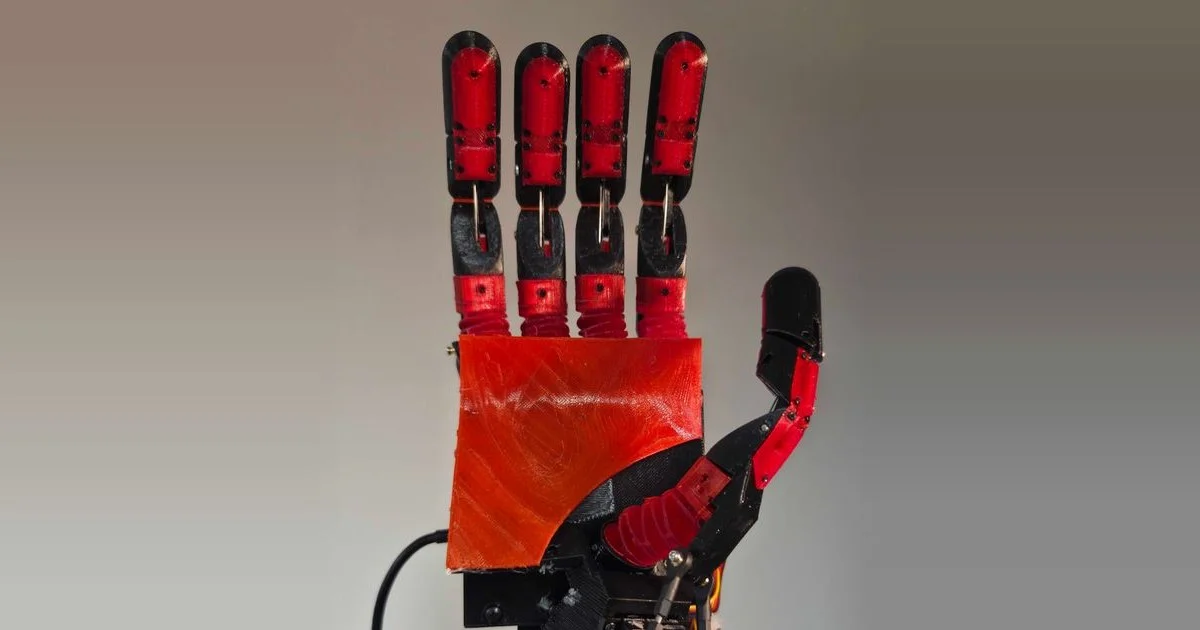
Researchers at the New Jersey Institute of Technology have built PHD-Hand, a five-fingered robot hand whose fingers are moved by rigid rods and linkages instead of the cables most low-cost hands use. It has 15 driven joints, three per finger, each powered by a hobby servo, with one small controller board running all of them. The hand is 200 millimeters long, weighs 570 grams and is printed in two common plastics on a budget 3D printer. PhD candidate Neel Adwani, who designed it under Professor Cong Wang, told Humanoids Daily the parts cost less than $650 in total.
The team showed the hand holding objects in all 33 grasp types of a standard human grasp list, and doing in-hand tasks such as turning a screwdriver and re-orienting a cube. A few grasps, including using chopsticks, were imperfect. The prototype has no touch sensors, and the team has not yet measured fingertip force or how much weight it can grip. The paper has been accepted at the Humanoids 2026 conference in Santa Clara in December, and the team plans to release the design files and software as open source in about a month.
Why it matters
Capable robot hands are expensive, and the cheap ones usually rely on cables that stretch, slip and need regular re-tightening. If rigid linkages give similar dexterity without that upkeep, students, hobbyists and small labs could build a working hand for the price of a phone. The open question is strength: until the force numbers are published, it is not clear how much real work this hand can do.