Boston Dynamics swaps Atlas's feet for wheels to stress-test its motors
Boston Dynamics fitted an Atlas humanoid with scooter wheels to load its actuators hard. The company calls it a research testbed and says it will not be sold.
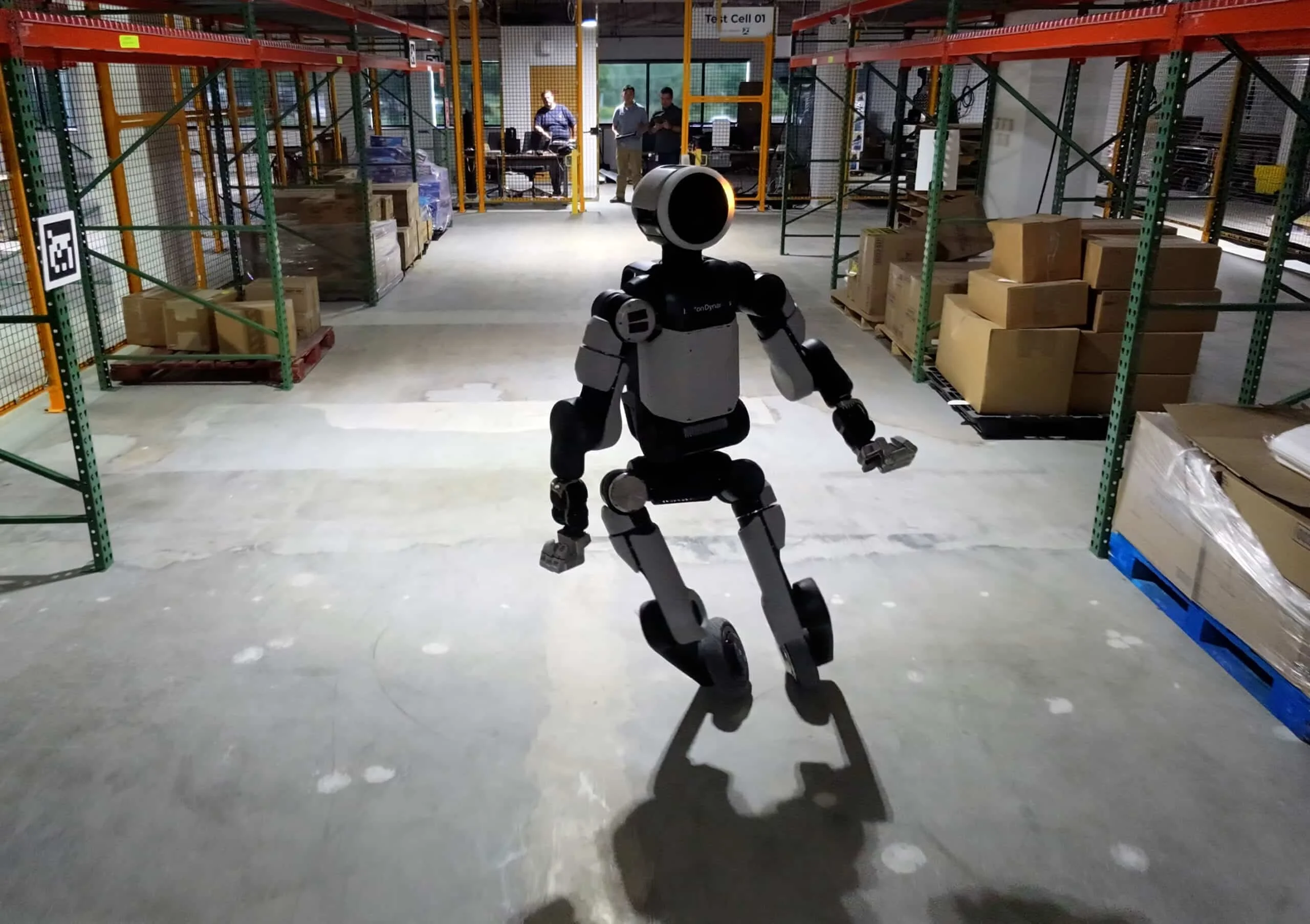
Boston Dynamics has removed the feet of an Atlas humanoid, bolted on scooter wheels and taught the robot to roll, drift and jump. Controls engineer Xiaoyu "Andy" Wu described the work in a blog post and video, as reported by Humanoids Daily. The company says the wheeled Atlas is a research testbed, not a product, and it has no plans to sell it.
The hardware change was small: one custom adapter, designed by Josh Geating, mounts each off-the-shelf rim straight onto the ankle motor. In simulation, each wheel became an ankle joint that can turn without limit. The team kept its existing reinforcement learning setup and adjusted reward weights, command ranges and posture handling. Rolling appeared without being scripted. A 360-degree spin jump taken from human motion capture worked on the first hardware attempt.
The reason for wheels was load. Rolling keeps the leg motors working at high torque and speed for long stretches, which walking rarely does. Wu says the simulated motor model was tuned to measurements from the real robot, and he calls the transfer from simulation to hardware nearly perfect.
Why it matters
Boston Dynamics says what it learned is already feeding back into the walking Atlas that Hyundai intends to put to work in its factories. Watch for Wu's next project, which targets how the policy copes when an actuator fails. The company has not published torque figures or details of what changed in the standard robot.