At a Wuhan robot centre, graduates teach humanoids one motion at a time
CBS News visited the Hubei Humanoid Robotics Innovation Center, where more than 100 graduates in sensor suits repeat household tasks hundreds of times to produce training data for humanoid robots.
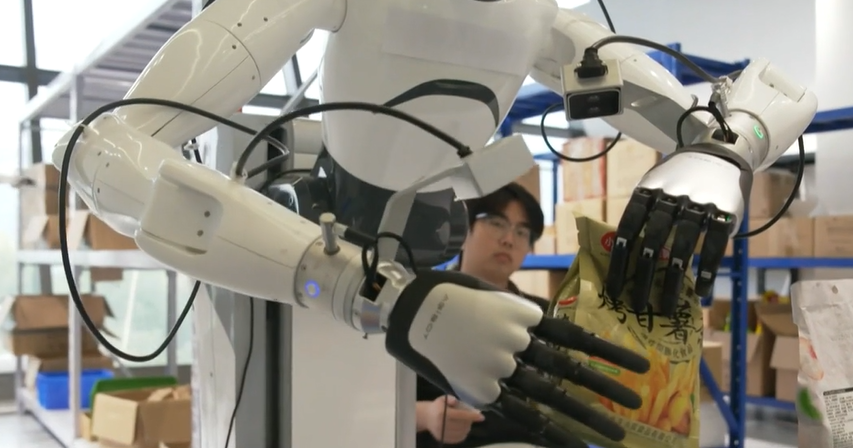
CBS News visited the Hubei Humanoid Robotics Innovation Center in Wuhan, China. On its top floor, more than 100 young engineering graduates sit at work stations wearing gloves and suits fitted with motion and touch sensors, while cameras record them. They pour water into a jug, sort cutlery or swap the battery in a flashlight, slowly and over and over, so the recordings can be used to train the centre's humanoid robots. Others steer a robot with a hand controller that copies their movements; one operator told CBS he had done 500 repetitions of pouring water so far and needed hundreds or thousands more.
The centre's head, Prof. Jiyin Cao, says the goal is robots for factories and homes, but he played down how soon they will arrive in households. Homes are unstructured and every one is different, he said, so a home robot could be three to five years away, or ten. CBS ties the push to China's ageing, shrinking population and its large supply of engineers: an estimated one million graduates a year, against about 140,000 in the US.
Why it matters
This is what humanoid progress actually runs on right now: people producing demonstration data by hand, one task at a time. It also explains why the man running the centre gives a far more cautious timeline for home robots than the billion-robot forecasts that make headlines. China's edge, in his own words, is its manufacturing base and full robotics supply chain, and a large, cheap pool of engineers to do the training work.