Lute raises $20M to teach robots a sense of touch
The Warsaw and Bay Area startup builds robot models trained on tactile data, plus software that turns each customer deployment into new training data. Its performance claims come from an investor.
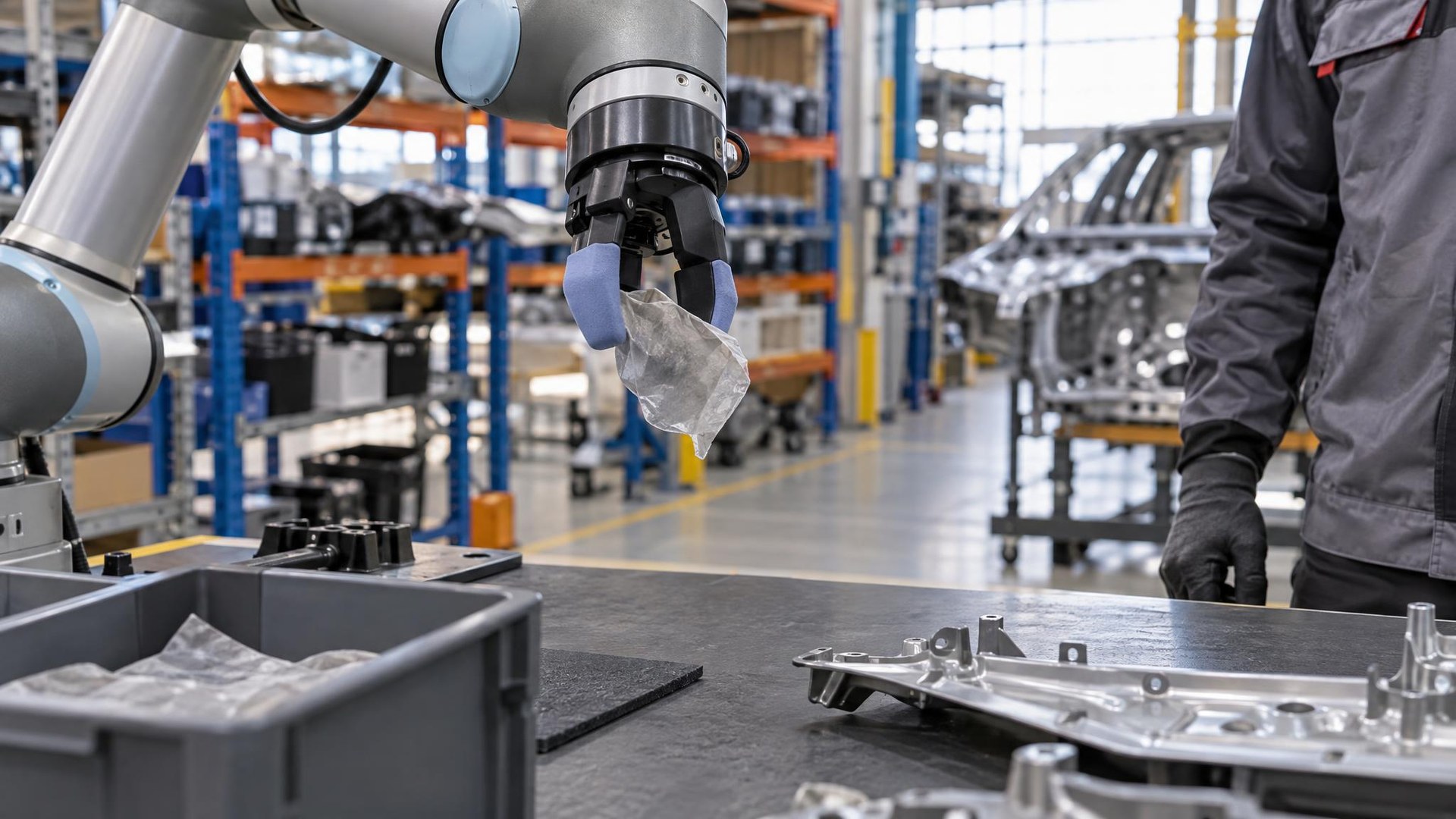
Robotics startup Lute has raised a seed round co-led by OTB Ventures and FORWARD.one, bringing its pre-seed and seed funding to $20 million, Unite.AI reports, citing OTB's announcement. Seedcamp, Credo Ventures and Naval Ravikant are among the other backers. Lute builds foundation models for robots that learn from touch as well as vision. Grip force, the first signs of an object slipping, and how soft or fragile something is are hard to see on camera, so the company co-designed soft, skin-like touch sensors and a portable rig to collect that data.
The second part is deployment software aimed at system integrators, the firms that install robots at customer sites. It monitors each task, pauses when something goes wrong and hands control to a remote operator. Successful runs and corrected failures then become training data. OTB says Lute, ten months after starting, is deployed at a large European automotive retail distributor, and that its models also run in hospital corridors. The 16-person team is split between Warsaw and the Bay Area; chief executive Paweł Budzianowski previously co-founded K-Scale Labs.
Why it matters
Most robot models today learn mainly from video, and handling objects is where they still fail most often. Touch data is one plausible way to close that gap, and it is scarce. The headline claim, that the first model Lute-0 matched the open-source Pi0.5 on dexterous tasks with about one-twentieth of the data, comes from the investor and has not been independently tested. The customers are not named.

